
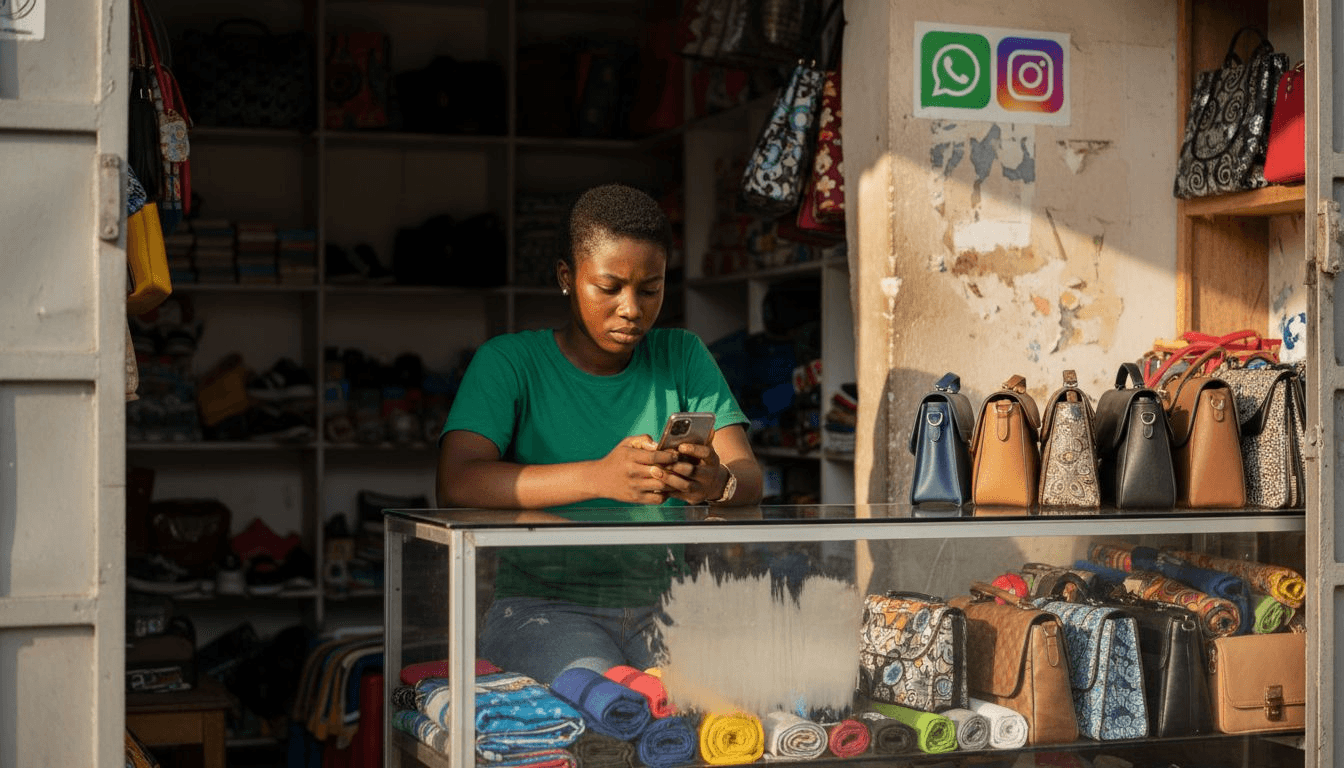
Finding new ways to connect with customers can be the difference between steady sales and missed opportunities. For Nigerian entrepreneurs, social networks like WhatsApp and Instagram are no longer just for chatting—they have become powerful retail growth engines where customer engagement transforms into real sales. Social networks facilitate consumer engagement through peer recommendations and community trust, helping you reach buyers directly in the spaces they trust most. Learn how using these platforms builds relationships, drives exponential growth, and helps you overcome the technical limits of traditional e-commerce.
Table of Contents
- Social Networks As Retail Growth Engines
- WhatsApp Commerce For Nigerian Entrepreneurs
- Key Benefits And Real-World Applications
- Common Challenges And How To Overcome Them
- Proven Social Commerce Success Strategies
Key Takeaways
| Point | Details |
|---|---|
| Social Networks as Sales Channels | Social platforms like WhatsApp and Instagram are now primary channels for retail, enabling direct sales and customer engagement. |
| Community Trust Drives Sales | Customers are more likely to trust recommendations from peers on social media, leading to organic purchases. |
| WhatsApp Commerce is Key | WhatsApp acts as a powerful retail tool for Nigerian entrepreneurs, combining trust and convenience for seamless transactions. |
| Effective Management is Crucial | To handle high transaction volumes, entrepreneurs need to adopt integrated management tools for tracking orders and payments. |
Social Networks as Retail Growth Engines
Social networks have moved beyond casual chatting. They're now the primary sales channels where millions of Nigerian shoppers discover, discuss, and buy products every single day.
When your customers talk about your products on WhatsApp Status, Instagram, or Facebook, they're creating organic momentum that no traditional advertisement can replicate. Social networks facilitate consumer engagement through peer recommendations and community trust, turning casual conversations into sales.
Here's what makes this shift so powerful for retailers like you:
- Direct sales happen in the spaces customers already occupy. Your customers spend hours on social platforms; your storefront should be there too.
- Word-of-mouth travels faster than ever. One satisfied customer sharing your product in their WhatsApp group reaches dozens of potential buyers instantly.
- Community building creates loyalty. Customers who feel part of your online community return and refer others organically.
- Lower barriers to purchase. Buyers can order directly without leaving the app they're already using.
Social commerce integrates e-commerce into social media, with platforms like WhatsApp and Instagram becoming primary shopping destinations. This shift means retail success now depends on your ability to meet customers where they already are.
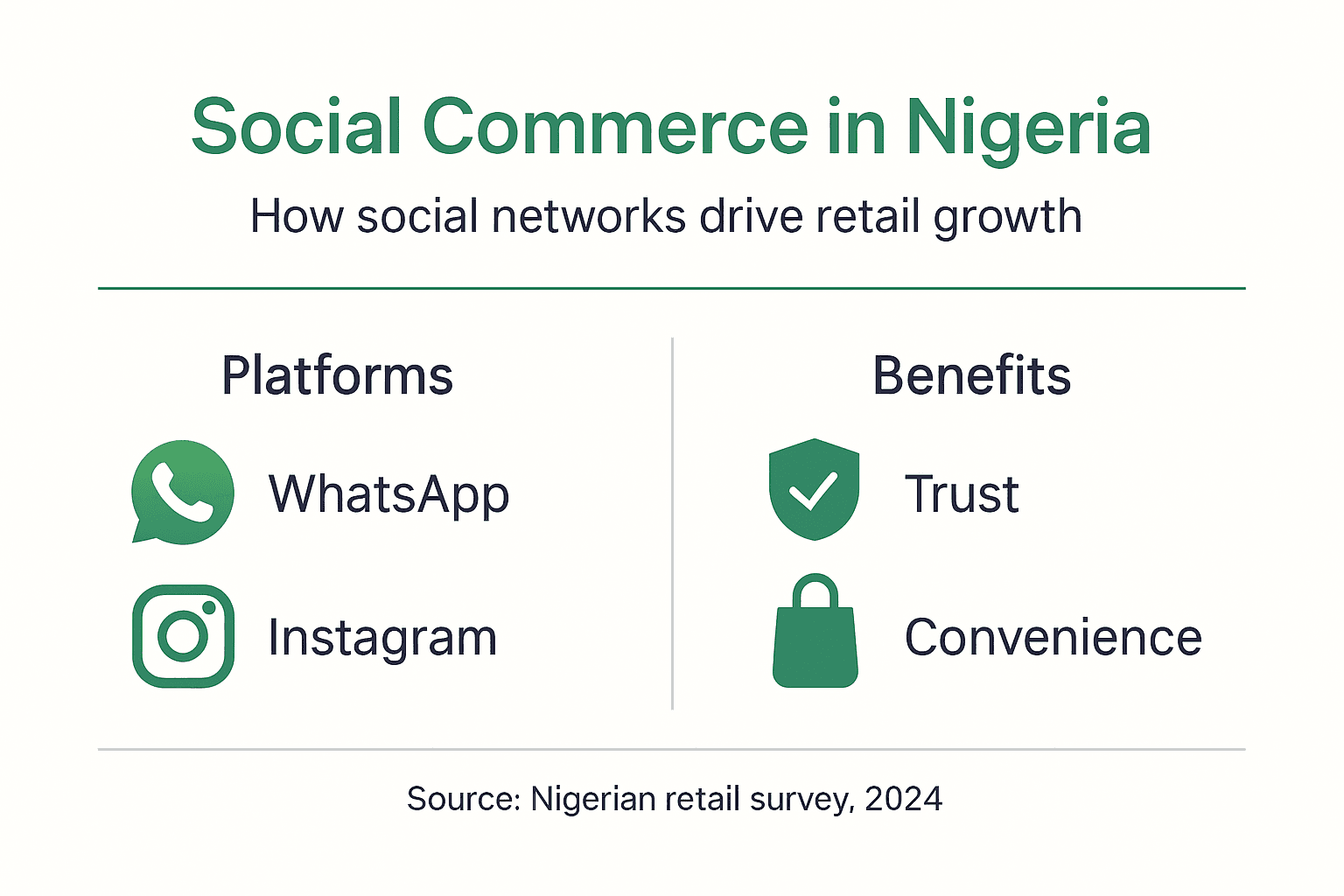
For Nigerian entrepreneurs, this creates a specific advantage. Most Nigerians have WhatsApp; many are still skeptical of traditional e-commerce websites. But they trust recommendations from friends in their groups and products showcased by familiar sellers they follow.
The growth happens through authenticity. When you post a product photo to your WhatsApp Status, real people who know you see it. When they buy, they tell their networks. That's exponential growth without expensive marketing campaigns.
Your social network isn't just for visibility anymore—it's your entire retail operation.
Young shoppers especially prefer buying through social networks rather than visiting separate websites. They want convenience, social proof, and the ability to ask questions in real-time through the same messaging app they use daily.
This is why platforms designed specifically for social commerce—ones that turn WhatsApp into a complete sales channel with product showcases, order tracking, and secure payments—have become so valuable for Nigerian retailers.
Pro tip: Start by identifying which social platforms your customers use most (usually WhatsApp and Instagram for Nigerian retailers), then focus your energy there rather than trying to be everywhere at once.
Here's how the leading social platforms in Nigeria support retail growth:
| Platform | Standout Retail Feature | Primary User Demographic | Unique Business Benefit |
|---|---|---|---|
| Status-based product showcasing | Broad, all age groups | Instant communication and trust | |
| Visual product discovery | Urban youth, young adults | Strong visual branding opportunity | |
| Community group sales | Older adults, families | Access to niche buying communities |
WhatsApp Commerce for Nigerian Entrepreneurs
WhatsApp isn't just a messaging app for you—it's become your most powerful retail tool. Millions of Nigerian entrepreneurs are already running full-scale businesses entirely through WhatsApp, and the numbers keep growing.
What makes WhatsApp so effective in Nigeria? It combines trust with convenience. Your customers already have the app open. They know you personally. They can see your products, ask questions instantly, and complete purchases without downloading anything new.
WhatsApp commerce has reshaped traditional retail by blending digital convenience with the personal selling practices Nigerian customers prefer. You're not just selling products—you're maintaining relationships through the same channel where people chat with family and friends.
Here's what makes WhatsApp uniquely powerful for Nigerian entrepreneurs:
- Direct communication. Customers reach you instantly with questions, concerns, or bulk orders without formal email chains.
- Voice notes replace emails. Your customers can send price inquiries, negotiate, and finalize deals using voice messages.
- Trust builds naturally. Personal interactions in WhatsApp create stronger customer loyalty than faceless websites ever could.
- Status updates drive discovery. Share product photos to your Status; followers see them without formal advertising costs.
- Payment flexibility. You can arrange payment methods that work for your customers—transfer, cash on delivery, or payment plans.
The reality is that many Nigerian shoppers still distrust traditional e-commerce websites. They worry about scams, poor customer service, or products that don't match descriptions. But they trust WhatsApp conversations with someone they know.
When you operate through WhatsApp, you're operating in an environment where social proof matters. Customers see you responding to others' questions in real-time. They notice how you handle complaints. They watch how quickly you deliver. That transparency builds the kind of reputation that translates directly into sales.
WhatsApp commerce works because it combines low barriers to entry with high trust—the exact combination Nigerian retail needed.
Many successful Nigerian retailers now manage hundreds of daily orders purely through WhatsApp. They use Status to showcase new inventory, handle payments through bank transfers or USSD, coordinate deliveries via messaging, and build customer bases that return month after month.

The challenge isn't whether WhatsApp works—it clearly does. The challenge is managing the volume professionally. That's where platforms designed specifically for WhatsApp commerce become valuable, allowing you to track orders, manage inventory, and process payments securely without juggling multiple apps.
Pro tip: Use WhatsApp Status daily to showcase products—even just a quick photo with a price and a "Available now" message drives immediate sales from your existing contacts.
Key Benefits and Real-World Applications
Social commerce isn't theoretical for Nigerian entrepreneurs anymore—it's delivering real sales and tangible results right now. Understanding what works helps you replicate success in your own retail operation.
The core benefit is simple: you meet customers where they already spend their time. They see your products, ask questions, and buy without friction. No lengthy checkout processes. No website navigation confusion. Just direct, personal commerce.
Social commerce enables seamless discovery and purchase within social media apps, expanding your reach to customers you couldn't reach through traditional retail channels. Nigerians increasingly prefer discovering and buying products through WhatsApp, Instagram, and Facebook rather than visiting separate websites.
Here's what successful Nigerian retailers are actually achieving:
- Faster sales cycles. Orders move from discovery to payment in minutes, not days.
- Higher customer loyalty. Personal relationships built through WhatsApp create repeat buyers.
- Lower operational costs. No physical storefront rent, minimal staff requirements, reduced overhead.
- Direct customer feedback. Real-time conversations reveal what customers want before you invest in inventory.
- Scalable growth. One person can manage hundreds of daily transactions efficiently.
- Access to untapped markets. Reach customers in secondary cities and rural areas without distribution networks.
Real-world applications you can implement immediately include product showcasing via Status updates—posting daily photos with prices drives immediate purchases from your contact list. Group selling works powerfully too: create WhatsApp groups for loyal customers, announce new products exclusively there, and watch orders flood in within hours.
Voice-based negotiation is uniquely effective in Nigeria. Customers send voice notes asking about bulk discounts, payment plans, or customizations. You respond via voice note. No formal emails needed.
Live selling events create urgency. Announce a product drop in your Status or group, stay active for two hours responding to questions, and convert interested followers into buyers immediately.
The real power isn't in any single feature—it's in how personal connection drives purchasing decisions.
Another practical application: customer testimonial sharing. Screenshot positive feedback or video clips of satisfied customers using your products. Share these in your Status weekly. Potential customers see real people benefiting from what you sell.
Bulk ordering from businesses and organizations is another massive opportunity. Once you establish yourself selling to individuals, corporate buyers approach you for wholesale quantities. WhatsApp makes these negotiations straightforward.
Pro tip: Create a simple WhatsApp group for repeat customers and announce new inventory there first—they'll buy before you even post to your general Status, and their quick purchases create social proof that attracts new buyers.
Common Challenges and How to Overcome Them
Social commerce in Nigeria works brilliantly, but it's not without friction. Understanding the obstacles you'll face helps you navigate them confidently and build a sustainable business.
The biggest challenge Nigerian entrepreneurs encounter is trust. Your customers have been scammed before—by sellers who disappear after payment, send counterfeit products, or misrepresent what they're selling. This skepticism is earned, and you need to overcome it systematically.
Building product credibility requires transparent communication, quality assurance, and leveraging community references to foster genuine buyer confidence. You can't just claim your products are authentic. You need to prove it.
Here's how successful Nigerian retailers tackle the core challenges:
- Trust building: Share customer testimonials, before-and-after photos, and video unboxings showing real products.
- Payment security: Offer payment methods customers prefer (bank transfer, USSD) and never ask for payment before confirming stock.
- Delivery reliability: Set realistic timelines, update customers constantly, and photograph products before shipping to prevent disputes.
- Product quality: Source from reputable suppliers and test products personally before selling them.
- Customer service responsiveness: Answer inquiries within minutes, not hours, to show you're legitimate and professional.
Logistics presents another real challenge. Nigeria's delivery infrastructure is inconsistent. Your customers in Lagos might receive orders in two days; customers in Port Harcourt might wait five days with no tracking updates.
Rising customer expectations and logistical bottlenecks require investing in reliable delivery and payment systems to build operational efficiency. Partner with delivery services you trust, communicate transparently about timelines, and sometimes absorb shipping costs to maintain customer satisfaction.
Payment infrastructure limitations frustrate both you and your customers. Bank transfers work, but they're not instant. USSD payments cap at lower amounts. Many customers still prefer cash on delivery, which ties up your capital.
The sellers thriving in Nigerian social commerce aren't those with perfect systems—they're the ones who communicate proactively when things go wrong.
Cybersecurity concerns exist but are often overblown. Nigerian customers worry about giving bank details through WhatsApp. Reassure them by using secure payment platforms, never asking for sensitive information unnecessarily, and explaining your security measures clearly.
Managing volume becomes challenging as you grow. Tracking who ordered what, who paid, and who hasn't received their order becomes chaotic if you're just using basic WhatsApp. This is where integrated systems help tremendously.
Pro tip: Document everything meticulously—save screenshots of orders, photos of packaged products, and delivery confirmations—these prove your legitimacy when disputes arise and build your reputation for professionalism.
Key obstacles and practical solutions for Nigerian social commerce:
| Challenge | Root Cause | Effective Solution |
|---|---|---|
| Customer Trust Issues | Scam fears, prior bad experiences | Public testimonials, product proofs |
| Payment Friction | Limited instant payment options | Offer multiple payment types |
| Delivery Uncertainty | Inconsistent logistics providers | Partner with reliable couriers |
| Managing High Volume | Manual order tracking | Use integrated management tools |
Proven Social Commerce Success Strategies
Nigerian entrepreneurs who succeed in social commerce don't rely on luck. They follow specific, repeatable strategies that convert followers into customers and customers into brand advocates.
The foundation of every successful strategy is understanding your platform. WhatsApp, Instagram, and Facebook each work differently. WhatsApp is intimate and personal—customers message you directly. Instagram is visual and discovery-focused. Facebook combines both with community groups. Your strategy must fit each platform's strengths.
Social commerce success depends on system quality, information quality, relationship quality, and social support to maximize consumer satisfaction and business outcomes. This means your product photos must be clear, your descriptions must be accurate, your responses must be immediate, and your community must feel supported.
Here are the strategies that actually work for Nigerian retailers:
- Build a referral system. Offer discounts or free products when customers refer friends. Leveraging user referrals reduces marketing costs while driving consistent traffic from trusted sources.
- Create exclusive communities. WhatsApp groups for loyal customers receive product announcements first, creating urgency and rewarding loyalty.
- Showcase social proof. Post customer reviews, photos, and testimonials constantly. New buyers trust real people more than your claims.
- Price strategically. Allow room for negotiation on bulk orders. Customers appreciate flexibility, and larger orders increase your profit faster.
- Engage consistently. Post daily to WhatsApp Status. Respond to messages within minutes. Active sellers appear more trustworthy and professional.
Content strategy matters tremendously. Don't just post product photos. Post videos of you using the product. Share customer success stories. Ask questions in your captions to encourage responses. Comments and replies signal to other followers that your products generate engagement.
Time your posts strategically. Post new inventory announcements during peak usage hours—typically 9-11 AM and 6-8 PM when Nigerians are checking their phones between work and evening activities.
The most successful Nigerian social commerce sellers treat their followers like friends, not just potential customers.
Build relationships over time. Don't push every customer toward immediate purchase. Some follow you for weeks before buying. Stay visible, stay helpful, stay authentic. When they're ready, they'll buy from the seller they recognize and trust.
Personalization amplifies everything. Use customers' names in messages. Remember their preferences. Offer product recommendations based on previous purchases. These small touches create loyalty that competitors can't break.
Pro tip: Track which products generate the most WhatsApp Status responses and which posts drive the fastest sales—then create more content around those winners while phasing out underperformers.
Empower Your Retail Growth with WhatsApp Social Commerce
Are you ready to overcome the trust barriers and logistical challenges Nigerian sellers face daily in social commerce? The article highlights how customers prefer authentic, real-time interactions on platforms like WhatsApp. With SabiTradeNG, you can leverage this powerful shift by turning WhatsApp into a complete retail sales channel. Showcase your products via WhatsApp Status, handle direct orders instantly, and accept secure payments all in one place. This means no more juggling multiple apps or losing customers due to slow responses and unclear processes.
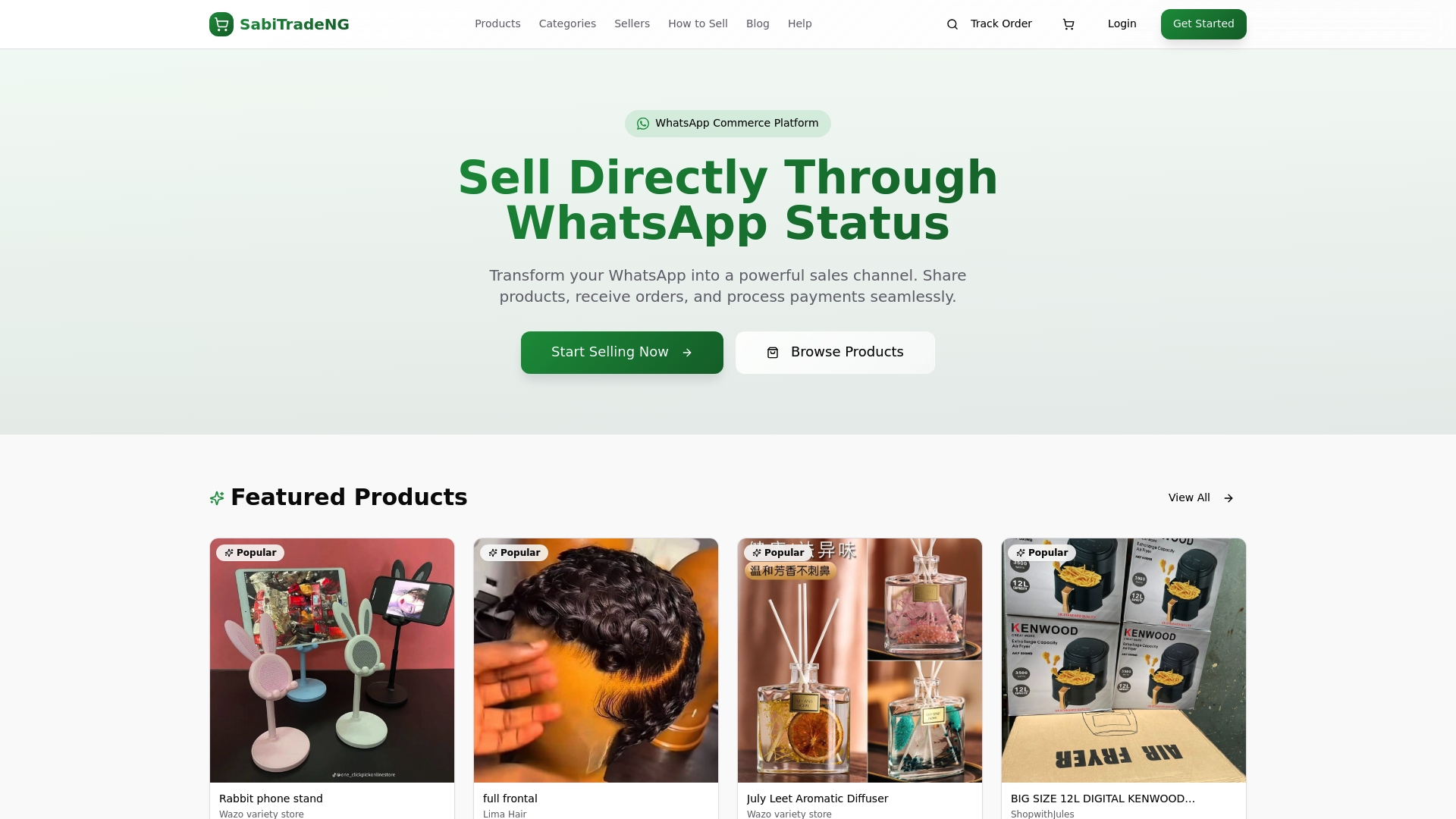
Step into the future of Nigerian retail by joining thousands of entrepreneurs who trust SabiTradeNG to simplify order management while building real customer relationships through WhatsApp. Discover how our platform integrates essential features for seamless social commerce and empowers you to grow your sales without a traditional storefront. Start now by visiting SabiTradeNG and transform your WhatsApp conversations into business success today.
Frequently Asked Questions
How can social networks drive sales for retailers?
Social networks facilitate direct sales by positioning products in the spaces where customers already spend time, making purchasing easy and engaging through peer recommendations and community trust.
What are the unique advantages of using WhatsApp for retail?
WhatsApp allows for direct communication, quick customer interaction, trust-building through personal connections, easy showcase of products via Status updates, and flexible payment options, making it a powerful retail tool.
How does social proof influence buying decisions on social networks?
Social proof, such as customer testimonials, shared reviews, and real-time interactions, enhances credibility and builds trust, leading potential buyers to feel more confident in purchasing products showcased by familiar sellers.
What strategies can retailers use to enhance customer engagement on social media?
Retailers can create exclusive communities, post regularly, engage with customers via comments, showcase social proof, and personalize interactions to build relationships and encourage loyalty among followers.